
Книги жанра книги по философии
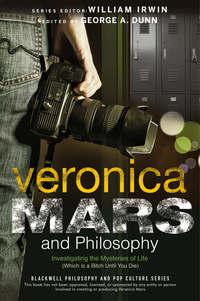
Veronica Mars is a kick-ass private investigator, smart and street-wise. But what can her character tell us about larger life issues, such as knowledge and skepticism, trust and friendship, revenge, race, gender, and feminism? What makes her tick? And why is Logan such a sarcastic bad boy, anyway? Veronica Mars and Philosophy features a thought-provoking collection of essays centered on philosophi…
Philosophy for busy people. Read a succinct account of the philosophy of Foucault in just one hour.The French philosopher Michel Foucault set about his task rather like a historian. After painstaking research, he concluded that knowledge and power were intimately related throughout history. He illustrated this central idea of his philosophy through studies of madness, sexuality, and discipline and…
Philosophy for busy people. Read a succinct account of the philosophy of Hegel in just one hour.With Hegel philosophy became very difficult indeed – even the great man himself conceded that ‘only one man understands me, and even he does not.’ His dialectical method produced the most grandiose metaphysical system known to humanity, and included absolutely everything, its most vital element being th…
One of the two major philosophical traditions of the twentieth century was linguistic analysis, derived largely from Wittgenstein. The other, diametrically opposed, came from Heidegger, and its fundamental question was: ‘What is the meaning of existence?’ For Heidegger, this was not a query that could simply be ‘analysed away’ – it was beyond the reach of logic or reason. This was the primary ‘giv…

Philosophy for busy people. Read a succinct account of the philosophy of Hume in just one hour.Hume reduced philosophy to ruins, denying the existence of everything except our actual perceptions themselves. The world is nothing more than part of my consciousness. Yet we know the world remains, and we go on as before. What Hume expressed was the status of our knowledge about the world – a world in …
Philosophy for busy people. Read a succinct account of the philosophy of J.S. Mill in just one hour.John Stuart Mill is remembered today as the leading exponent of Utilitarianism, arguing that our aim in life must be the attainment of pleasure and the minimizing of pain for the majority of people. The principle that lies at the heart of Utilitarianism is ‘the greatest benefit of the greatest numbe…
Philosophy for busy people. Read a succinct account of the philosophy of Kant in just one hour.Immanuel Kant taught and wrote prolifically about physical geography yet never travelled farther than forty miles from his home in Königsberg. Appropriately, his philosophy strenuously denies that all knowledge is derived from experience, insisting instead that all experience must conform to knowledge. K…
Philosophy for busy people. Read a succinct account of the philosophy of Kierkegaard in just one hour.Although Kierkegaard was not a philosopher in the academic sense, he produced what many people expect of philosophy. He didn’t write about the world, he wrote about life – how we live and how we choose to live, particularly focussing on the individual and the notion of his (or her) existence. Kier…
Philosophy for busy people. Read a succinct account of the philosophy of Locke in just one hour.Much of Locke’s thought we would now regard as common sense. One of the most influential of Enlightenment thinkers; his philosophy was to lay the foundations of empiricism with its belief that our knowledge of the world is based on experience. Locke’s work introduced the idea of liberal democracy – a co…
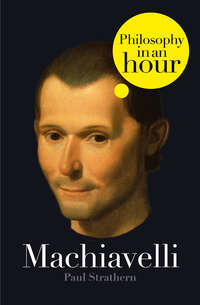
Philosophy for busy people. Read a succinct account of the philosophy of Machiavelli in just one hour.Niccolò Machiavelli’s work remains misunderstood – synonymous with wicked scheming and underhand politics – nearly 350 years after his death. His philosophy of statecraft was scientific and highly rational, leaving sentiment, and ultimately morality, to one side. His advice is as relevant to moder…
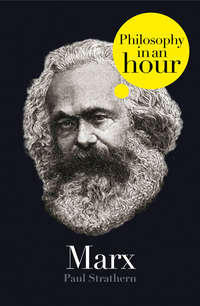
Philosophy for busy people. Read a succinct account of the philosophy of Karl Marx in just one hour.Karl Marx's philosophical critique of capitalism and his solution of communism directly led to the formation of the communist state in the Soviet Union. Whilst this great venture has now all but completely failed, Marx’s philosophy has proved to be arguably the most influential of the twentieth cent…

A comprehensive overview of Slavoj ?i?ek's thought, including all of his published works to date. Provides a solid basis in the work of an engaging thinker and teacher whose ideas will continue to inform philosophical, psychological, political, and cultural discourses well into the future Identifies the major currents in ?i?ek's thought, discussing all of his works and providing a background in co…

This is Philosophy: An Introduction offers an engagingly written introduction to philosophical concepts that include ethics, the existence of God, free will, personal identity, philosophy of mind, and epistemology. Conveys the excitement and importance of philosophy while explaining difficult concepts clearly for the average undergraduate Represents a student-friendly yet knowledgeable guide to th…