
Книги жанра книги по философии






Thomas Hobbes was the first great English political philosopher. His work excited intense controversy among his contemporaries and continues to do so in our own time. In this masterly introduction to his work, Bernard Gert provides the first account of Hobbes’s political and moral philosophy that makes it clear why he is regarded as one of the best philosophers of all time in both of these fields.…

Why have Western societies that were once overwhelmingly Christian become so secular? Looking to the feelings and faith of ordinary people, the award-winning author of Protestants Alec Ryrie offers a bold new history of atheism. We think we know the history of faith: how the ratio of Christian believers has declined and a secular age dawned. In this startlingly original history, Alex Ryrie puts fa…

Предлагаемая книга представляет собой наиболее систематизированное изложение идей Ш. Фурье. Автор подробно раскрывает свою теорию страстного притяжения, ее применение для экономической и политической реорганизации общества; детально описывает устройство нового общественного строя и возможности претворения его в жизнь.
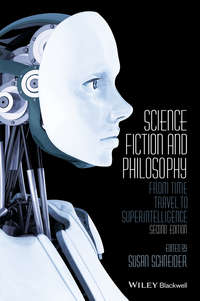
Featuring numerous updates and enhancements, Science Fiction and Philosophy, 2nd Edition, presents a collection of readings that utilize concepts developed from science fiction to explore a variety of classic and contemporary philosophical issues. Uses science fiction to address a series of classic and contemporary philosophical issues, including many raised by recent scientific developments Explo…

Системное мировоззрение не является застывшей догмой, не строится на противопоставлении другим взглядам, а стремится охватить их в единой системе развития, его антипод — бессистемность. Стремясь охватить человека и окружающую действительность в их полноте и единстве, оно позволяет видеть в том, что казалось ранее монолитным, взаимодействие элементов, а в том, что казалось противоположным — системн…

Метафизика посвящена анализу наиболее общих онтологических понятий, первичных видов и особенностей бытия. У Аристотеля мы находим тесно связанными между собой три фундаментальных понятия: цели, блага и разума.

Психиатрическая больница… сумасшедший… религиозный бред… Или что-то большее? Эта книга о картине мира странных людей. Эта книга о новой вере. Эта книга — библия цифровой эпохи.

Эссе на тему: Субъективный взгляд на современное общество, политический строй, а также на личность и деятельность Первого Президента Республики Казахстан.

Притчи — кладезь мудрости. Облечённые в стихотворную форму, они более привлекательны, легче воспринимаются, лучше запоминаются. На страницах этой книги читателю предлагаются всевозможные увлекательные и удивительные истории — современные и идущие из глубины веков, строгие и иронические, популярные и доселе неизвестные, для искателей истины и для чтения в семейном кругу. «Отшельника долго терзали с…
Притчи — кладезь мудрости. Облечённые в стихотворную форму, они более привлекательны, легче воспринимаются, лучше запоминаются. На страницах этой книги читателю предлагаются всевозможные увлекательные и удивительные истории — современные и идущие из глубины веков, строгие и иронические, популярные и доселе неизвестные, для искателей истины и для чтения в семейном кругу. «Отшельника долго терзали с…