
Книги жанра книги по философии
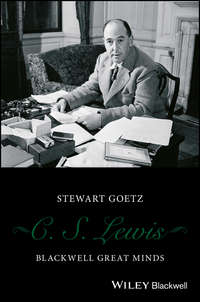
The definitive exploration of C.S. Lewis’s philosophical thought, and its connection with his theological and literary work Arguably one of the most influential writers of the twentieth century, C.S. Lewis is widely hailed as a literary giant, his seven-volume Chronicles of Narnia having sold over 65 million copies in print worldwide. A prolific author and scholar whose intellectual contributions …
The definitive exploration of C.S. Lewis’s philosophical thought, and its connection with his theological and literary work Arguably one of the most influential writers of the twentieth century, C.S. Lewis is widely hailed as a literary giant, his seven-volume Chronicles of Narnia having sold over 65 million copies in print worldwide. A prolific author and scholar whose intellectual contributions …
The definitive exploration of C.S. Lewis’s philosophical thought, and its connection with his theological and literary work Arguably one of the most influential writers of the twentieth century, C.S. Lewis is widely hailed as a literary giant, his seven-volume Chronicles of Narnia having sold over 65 million copies in print worldwide. A prolific author and scholar whose intellectual contributions …
In this book, David Burrell, one of the foremost philosophical theologians in the English-speaking world, presents the best of his work on creation and human freedom. A collection of writings by one of the foremost philosophers of religion in the English-speaking world. Brings together in one volume the best of David Burrell’s work on creation and human freedom from the last twenty years. Dismantl…
In this book, David Burrell, one of the foremost philosophical theologians in the English-speaking world, presents the best of his work on creation and human freedom. A collection of writings by one of the foremost philosophers of religion in the English-speaking world. Brings together in one volume the best of David Burrell’s work on creation and human freedom from the last twenty years. Dismantl…
In this book, David Burrell, one of the foremost philosophical theologians in the English-speaking world, presents the best of his work on creation and human freedom. A collection of writings by one of the foremost philosophers of religion in the English-speaking world. Brings together in one volume the best of David Burrell’s work on creation and human freedom from the last twenty years. Dismantl…
In this book, David Burrell, one of the foremost philosophical theologians in the English-speaking world, presents the best of his work on creation and human freedom. A collection of writings by one of the foremost philosophers of religion in the English-speaking world. Brings together in one volume the best of David Burrell’s work on creation and human freedom from the last twenty years. Dismantl…
Meaning and Mystery offers a challenge to the way Philosophy has traditionally approached the issue of belief in God as a theoretical problem, proposing instead a form of reflection more appropriate to the practical nature of the issue. Makes use of abundant illustrative material, from both literature, such as Les Misérables, Edwin Abott’s Flatland, Yann Martel’s Life of Pi and Leo Tolstoy’s A Con…
Meaning and Mystery offers a challenge to the way Philosophy has traditionally approached the issue of belief in God as a theoretical problem, proposing instead a form of reflection more appropriate to the practical nature of the issue. Makes use of abundant illustrative material, from both literature, such as Les Misérables, Edwin Abott’s Flatland, Yann Martel’s Life of Pi and Leo Tolstoy’s A Con…
Meaning and Mystery offers a challenge to the way Philosophy has traditionally approached the issue of belief in God as a theoretical problem, proposing instead a form of reflection more appropriate to the practical nature of the issue. Makes use of abundant illustrative material, from both literature, such as Les Misérables, Edwin Abott’s Flatland, Yann Martel’s Life of Pi and Leo Tolstoy’s A Con…
Meaning and Mystery offers a challenge to the way Philosophy has traditionally approached the issue of belief in God as a theoretical problem, proposing instead a form of reflection more appropriate to the practical nature of the issue. Makes use of abundant illustrative material, from both literature, such as Les Misérables, Edwin Abott’s Flatland, Yann Martel’s Life of Pi and Leo Tolstoy’s A Con…
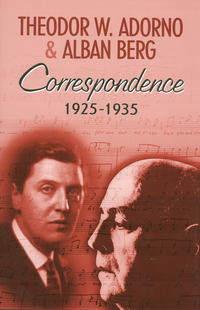
Adorno was twenty-one years old when he traveled to Vienna in March 1925 to study musical composition with Alban Berg. Twenty years later, Adorno wrote: «how much of my writing will remain is beyond my knowledge or my control, but there is one claim I wish to stake: that I understand the language of birds,» It was no less than the desire to learn to speak this language that drew him to Berg. Adorn…
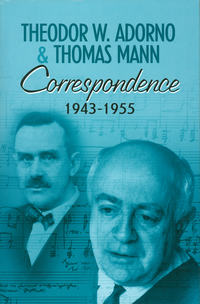
In December 1945 Thomas Mann wrote a famous letter to Adorno in which he formulated the principle of montage adopted in his novel Doctor Faustus. The writer expressly invited the philosopher to consider, with me, how such a work and I mean Leverkhns work could more or less be practically realized. Their close collaboration on questions concerning the character of the fictional composers putatively…
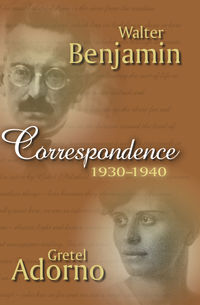
We must see to it that we put the best of ourselves in our letters; for there is nothing to suggest that we shall see each other again soon. So wrote Walter Benjamin to Gretel Adorno in spring 1940 from the south of France, shortly before he took his own life. The correspondence between Gretel Adorno and Walter Benjamin, published here in its complete form for the first time, is the document of a …
We live in a time of turbulent change when many of the frameworks that have characterized our societies over the last few centuries – such as the international order of sovereign nation-states – are being called into question. In this new volume of essays and interviews, Habermas focuses his attention on these processes of change and provides some of the resources needed to understand them. What k…