Книги жанра научно-популярная литература

Written by industry professionals: a workplace safety specialist in conjunction with a practicing physician and medical manager. Provides recommendations for assessing hospital safety practices as well as specific suggestions for behavioural interventions. Brings a systematic approach to healthcare safety, identifying common problems through illustrative case studies and offering solutions. Offers…

This book provides a sound introduction to the basic physical processes that dominate the workings of the Earth, its atmosphere and hydrosphere. It systematically introduces the physical processes involved in the Earth’s systems without assuming an advanced physics or mathematical background. Offers an integrated approach to the study of earth, marine and atmospheric environmental sciences, reflec…
Metabolism includes various pathways of chemical reactions; understanding these pathways leads to an improved knowledge of the causes, preventions, and cures for human diseases. Medical Biochemistry: Human Metabolism in Health and Disease provides a concise yet thorough explanation of human metabolism and its role in health and diseases. Focusing on the physiological context of human metabolism wi…

The only book series to summarize the latest progress on organic reaction mechanisms, Organic Reaction Mechanisms, 1968 surveys the development in understanding of the main classes of organic reaction mechanisms reported in the primary scientific literature in 1968. The 4th annual volume in this highly successful series highlights mechanisms of stereo-specific reactions. Reviews are compiled by a …

While the theory of special relativity is often associated with the idea of traveling faster than light, this book shows that in all these cases subtle forces of nature conspire to prevent these motions being harnessed to send signals faster than the speed of light. The author tackles these topics both conceptually, with minimal or no mathematics, and quantitatively, making use of numerous illustr…
This systematic introduction to the topic includes theoretical concepts to help readers understand and predict surface forces, while also integrating experimental techniques and practical applications with up-to-date examples plus motivating exercises. Starting with intermolecular forces, the authors discuss different surfaces forces, with a major part devoted to surface forces between solid surfa…

A practical guide to wastewater pathogens The fourth volume in Wiley's Wastewater Microbiology series, Wastewater Pathogens offers wastewater personnel a practical guide that is free of overly technical jargon. Designed especially for operators, the text provides straight facts on the biology of treatment as well as appropriate protective measures. Coverage includes: * An overview of relevant hist…

Ecological Modeling:A Commonsense Approach to Theory and Practice explores how simulation modeling and its new ecological applications can offer solutions to complex natural resource management problems. This is a practical guide for students, teachers, and professional ecologists. Examines four phases of the modeling process: conceptual model formulation, quantitative model specification, model e…
Global Positioning System is the first book to guide social scientists with little or no mapping or GPS experience through the process of collecting field data from start to finish. Takes readers step-by-step through the key stages of a GPS fieldwork project. Explains complex background topics in clear, easy-to-understand language. Provides simple guidelines for GPS equipment selection. Provides p…

Designed to be carried in the field, this pocket-sized how-to book is a practical guide to basic techniques in mapping geological structures. In addition to including the latest computerised developments, the author provides succinct information on drawing cross-sections and preparing and presenting 'fair copy' maps and geological diagrams. Contains a brief chapter on the essentials of report writ…
We live in times of increasing public distrust of the main institutions of modern society. Experts, including scientists, are suspected of working to hidden agendas or serving vested interests. The solution is usually seen as more public scrutiny and more control by democratic institutions – experts must be subservient to social and political life. In this book, Harry Collins and Robert Evans take…
Most conventional gardening books concentrate on how and when to carry out horticultural tasks such as pruning, seed sowing and taking cuttings. This book is unique in explaining in straightforward terms some of the science that underlies these practices. It is principally a book of 'Why' – Why are plants green? Why should one cut beneath a leaf node when taking cuttings? Why do plants need so muc…
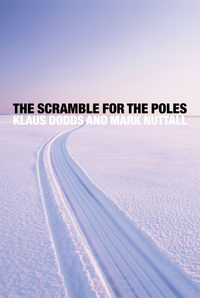
In August 2007 a Russian flag was planted under the North Pole during a scientific expedition triggering speculation about a new scramble for resources beneath the thawing ice. But is there really a global grab for Polar territory and resources? Or are these activities vastly exaggerated? In this rich and wide-ranging book, Klaus Dodds and Mark Nuttall look behind the headlines and hyperbole to re…
Nursing is a growing area of higher education, in which an introduction to statistics is an essential component. There is currently a gap in the market for a 'user-friendly' book which is contextulised and targeted for nursing. Practical Statistics for Nursing and Health Care introduces statistical techniques in such a way that readers will easily grasp the fundamentals to enable them to gain the …
This Second Edition is aimed at students taking a first course in this subject, although it will also be of interest to professional physicists and electronic engineers requiring a grasp of the fundamentals of this important area of physics. Basic concepts are introduced in an easily accessible context: for example, wave propagation in crystals is introduced using one-and two-dimensional geometrie…