Книги жанра об истории серьезно

This book provides a fascinating and unique history of the Britons from the late Iron Age to the late Middle Ages. It also discusses the revivals of interest in British culture and myth over the centuries, from Renaissance antiquarians to modern day Druids. A fascinating and unique history of the Britons from the late Iron Age to the late Middle Ages. Describes the life, language and culture of th…
This cultural history challenges the standard depiction of the 1660s as the beginning of a new age of stability, demonstrating that the decade following the Restoration was just as complex and exciting as the revolutionary years that preceded it.
This cultural history challenges the standard depiction of the 1660s as the beginning of a new age of stability, demonstrating that the decade following the Restoration was just as complex and exciting as the revolutionary years that preceded it.
This cultural history challenges the standard depiction of the 1660s as the beginning of a new age of stability, demonstrating that the decade following the Restoration was just as complex and exciting as the revolutionary years that preceded it.
This cultural history challenges the standard depiction of the 1660s as the beginning of a new age of stability, demonstrating that the decade following the Restoration was just as complex and exciting as the revolutionary years that preceded it.
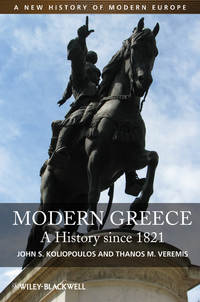
Modern Greece: A History since 1821 is a chronological account of the political, economic, social, and cultural history of Greece, from the birth of the Greek state in 1821 to 2008 by two leading authorities. Pioneering and wide-ranging study of modern Greece, which incorporates the most recent Greek scholarship Sets the history of modern Greece within the context of a broad geo-political framewor…

Winner of the 2006 John D. Criticos Prize This book introduces the reader to the complex history, ethnicity, and identity of the Byzantines. This volume brings Byzantium – often misconstrued as a vanished successor to the classical world – to the forefront of European history Deconstructs stereotypes surrounding Byzantium Beautifully illustrated with photographs and maps
Winner of the 2006 John D. Criticos Prize This book introduces the reader to the complex history, ethnicity, and identity of the Byzantines. This volume brings Byzantium – often misconstrued as a vanished successor to the classical world – to the forefront of European history Deconstructs stereotypes surrounding Byzantium Beautifully illustrated with photographs and maps
Winner of the 2006 John D. Criticos Prize This book introduces the reader to the complex history, ethnicity, and identity of the Byzantines. This volume brings Byzantium – often misconstrued as a vanished successor to the classical world – to the forefront of European history Deconstructs stereotypes surrounding Byzantium Beautifully illustrated with photographs and maps
Winner of the 2006 John D. Criticos Prize This book introduces the reader to the complex history, ethnicity, and identity of the Byzantines. This volume brings Byzantium – often misconstrued as a vanished successor to the classical world – to the forefront of European history Deconstructs stereotypes surrounding Byzantium Beautifully illustrated with photographs and maps

Сим победиши – исторический роман Веры Крыжановской (Рочестер). Действие романа, происходит в древнем Риме во времена распространения христианства, посвящено Битве у Мульвийского моста 28 октября 312 г. н. э.– сражению тогдашнего правителя Древнего Рима императора Максенция с будущим римским императором Константином I Великим, в результате которого последний стал единоличным правителем западной ча…
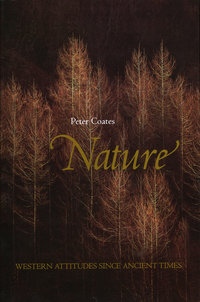
'Nature' is a deceptively simple and ahistorical term, suggesting intrinsic, unchanging reality. Yet nature has a history too, both in terms of human attitudes and human impacts. Coates outlines the major understandings of 'nature' in the western world since classical times, from nature as higher authority to its more recent meaning of threatened physical space and life forms. Unlike many others, …
'Nature' is a deceptively simple and ahistorical term, suggesting intrinsic, unchanging reality. Yet nature has a history too, both in terms of human attitudes and human impacts. Coates outlines the major understandings of 'nature' in the western world since classical times, from nature as higher authority to its more recent meaning of threatened physical space and life forms. Unlike many others, …
'Nature' is a deceptively simple and ahistorical term, suggesting intrinsic, unchanging reality. Yet nature has a history too, both in terms of human attitudes and human impacts. Coates outlines the major understandings of 'nature' in the western world since classical times, from nature as higher authority to its more recent meaning of threatened physical space and life forms. Unlike many others, …
'Nature' is a deceptively simple and ahistorical term, suggesting intrinsic, unchanging reality. Yet nature has a history too, both in terms of human attitudes and human impacts. Coates outlines the major understandings of 'nature' in the western world since classical times, from nature as higher authority to its more recent meaning of threatened physical space and life forms. Unlike many others, …