Книги жанра органическая химия
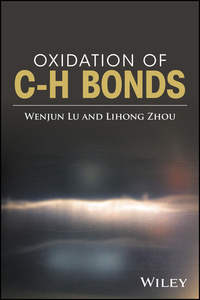
A combination of oxidation methods and C‒H bond functionalization, this book emphasizes mechanistic understanding and critical analysis of synthetic reactions to offer a guide or manual for practicing chemists. • Combines oxidation methods and C‒H bond functionalization, two of the most important aspects of organic synthesis • Deals with C‒H bonds, an area of dynamic and continuous research across…
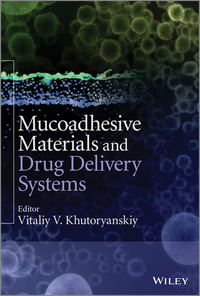
Mucoadhesion defined as attachment of synthetic or natural materials to mucosal tissues has been widely exploited in pharmaceutical forms. This multi-author book provides an up-to-date account of current research on mucoadhesive materials and drug delivery systems. The introductory section describes the structure and physiology of various mucosal surfaces (oral, nasal, ocular, gastrointestinal and…
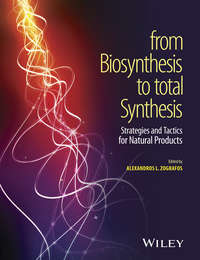
Focusing on biosynthesis, this book provides readers with approaches and methodologies for modern organic synthesis. By discussing major biosynthetic pathways and their chemical reactions, transformations, and natural products applications; it links biosynthetic mechanisms and more efficient total synthesis. • Describes four major biosynthetic pathways (acetate, mevalonate, shikimic acid, and mixe…
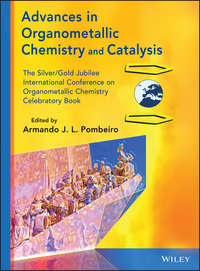
A contemporary compilation of recent achievements in organometallic chemistry The prestigious International Conference on Organometallic Chemistry (ICOMC) was launched in 1963, providing a forum for researchers from around the world to share their findings and explore new paths to advance our knowledge and application of organometallic chemistry. The 25th ICOMC, held in Lisbon in 2012, gathered mo…
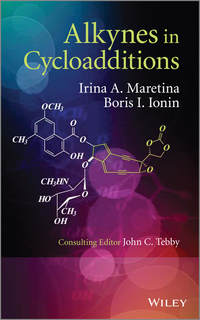
Acetylene systems present a new route to cyclic compounds as an alternative to more traditional methods employed in classical organic chemistry. The synthesis of cyclic structures based on acetylene systems has important applications in the formation of nanostructures, naturally occurring compounds and chemosensory materials for the design of nonlinear optics, electronic and photonic devices. Alky…
Organized to enable students and synthetic chemists to understand and expand on aromatic reactions covered in foundation courses, the book offers a thorough and accessible mechanistic explanation of aromatic reactions involving arene compounds. • Surveys methods used for preparing arene compounds and their transformations • Connects reactivity and methodology with mechanism • Helps readers apply a…
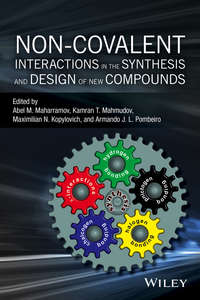
This book aims to overview the role of non-covalent interactions, such as hydrogen and halogen bonding, π-π, π-anion and electrostatic interactions, hydrophobic effects and van der Waals forces in the synthesis of organic and inorganic compounds, as well as in design of new crystals and function materials. The proposed book should allow to combine, in a systematic way, recent advances on the appli…
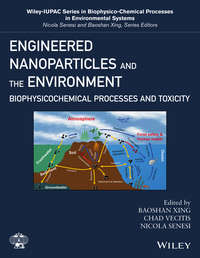
Details the source, release, exposure, adsorption, aggregation, bioavailability, transport, transformation, and modeling of engineered nanoparticles found in many common products and applications Covers synthesis, environmental application, detection, and characterization of engineered nanoparticles Details the toxicity and risk assessment of engineered nanoparticles Includes topics on the transpo…
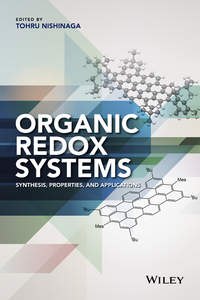
Providing a thorough overview of leading research from internationally-recognized contributing authors, this book describes methods for the preparation and application of redox systems for organic electronic materials like transistors, photovoltaics, and batteries. • Covers bond formation and cleavage, supramolecular systems, molecular design, and synthesis and properties • Addresses preparative m…
Fiesers' Reagents for Organic Synthesis provides an up-to-date, A-to-Z listing of reagents cited in synthetic literature. • Covers, in volume 28, chemical literature and methodologies from July 2011 – December 2012 • Features entries with concise descriptions, illustrations of chemical reactions, selected examples of applications • Includes author indexes and subject indexes • Offers practical inf…
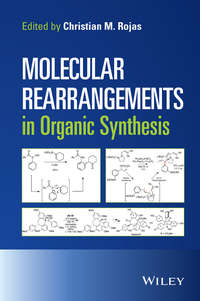
Designed for practitioners of organic synthesis, this book helps chemists understand and take advantage of rearrangement reactions to enhance the synthesis of useful chemical compounds. Provides ready access to the genesis, mechanisms, and synthetic utility of rearrangement reactions Emphasizes strategic synthetic planning and implementation Covers 20 different rearrangement reactions Includes app…
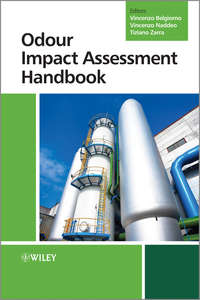
Odours have become a priority concern for facility operators, engineers and urban planners who deal with waste and industrial treatment plants. The subjectivity of smell perception, its variability due to frequency and weather conditions, and the complex nature of the substances involved, has long hampered the regulation of odour emissions. This book provides a comprehensive framework for the asse…
This first book to illuminate this important aspect of chemical synthesis improves the lifetime of catalysts, thus reducing material and saving energy, costs and waste. The international panel of expert authors describes the studies that have been conducted concerning the way homogeneous catalysts decompose, and the differences between homogeneous and heterogeneous catalysts. The result is a ready…
Smart materials are used to develop more cost-effective and high-performance water treatment systems as well as instant and continuous ways to monitor water quality. Smart materials in water research have been extensively utilized for the treatment, remediation, and pollution prevention. Smart materials can maintain the long term water quality, availability and viability of water resource. Thus, w…
A one-stop resource for researchers, developers, and post graduate students in pharmaceutical science. This handbook and ready reference provides detailed, but not overloaded information – presenting the topic without unnecessarily complex formalism. As such, it gives a systematic and coherent overview of disordered materials for pharmaceutical applications, covering fundamental aspects, as well a…