Книги жанра зарубежная образовательная литература
The Advances in Chemical Physics series provides the chemical physics and physical chemistry fields with a forum for critical, authoritative evaluations of advances in every area of the discipline. Filled with cutting-edge research reported in a cohesive manner not found elsewhere in the literature, each volume of the Advances in Chemical Physics series serves as the perfect supplement to any adva…
The Advances in Chemical Physics series provides the chemical physics and physical chemistry fields with a forum for critical, authoritative evaluations of advances in every area of the discipline. Filled with cutting-edge research reported in a cohesive manner not found elsewhere in the literature, each volume of the Advances in Chemical Physics series serves as the perfect supplement to any adva…
The Advances in Chemical Physics series provides the chemical physics and physical chemistry fields with a forum for critical, authoritative evaluations of advances in every area of the discipline. Filled with cutting-edge research reported in a cohesive manner not found elsewhere in the literature, each volume of the Advances in Chemical Physics series serves as the perfect supplement to any adva…
The Advances in Chemical Physics series provides the chemical physics and physical chemistry fields with a forum for critical, authoritative evaluations of advances in every area of the discipline. Filled with cutting-edge research reported in a cohesive manner not found elsewhere in the literature, each volume of the Advances in Chemical Physics series serves as the perfect supplement to any adva…

This practical, well-organized reference delves deeply into functional group transformations, to provide all the detailed information that researchers need. Topics are organized into the following sections: oxidation, reduction, asymmetric synthesis, and functional group manipulations Each section includes a description of the functional group transformation, the historical perspective, mechanisms…

This book explores the possibility that life exists on Mars. It provides an interdisciplinary overview of the early evolution of life in hydrothermal ecosystems on Earth, focusing on the problem of remote sensing and incorporating geological work relevant to the search for evidence of early life on Earth and Mars. It discusses the belief that studying thermal spring deposits as part of this search…
Progress in Physical Organic Chemistry is dedicated to reviewing the latest investigations into organic chemistry that use quantitative and mathematical methods. These reviews help readers understand the importance of individual discoveries and what they mean to the field as a whole. Moreover, the authors, leading experts in their fields, offer unique and thought-provoking perspectives on the curr…
This series in three volumes considers maps as constructions resulting from a number of successive transformations and stages integrated in a logical reasoning and an order of choices. Volume 2 focuses on the impact of the quantitative revolution, partially related to the advent of the computer age, on thematic cartography.
Low-dimensional solids are of fundamental interest in materials science due to their anisotropic properties. Written not only for experts in the field, this book explains the important concepts behind their physics and surveys the most interesting one-dimensional systems and discusses their present and emerging applications in molecular scale electronics. The second edition of this successful book…
It is a basic law of chemistry that pressure influences reactions. Thus, high-pressure reactions are no longer a rarity in chemistry today, but rather are indispensable tools – whether for innovative syntheses, new products or for explaining reaction mechanisms. The expert editors, Rudi van Eldik and Frank-Gerrit Klarner, provide a comprehensive overview of this fascinating field, ranging from the…
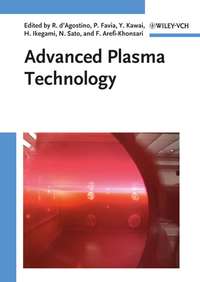
A panel of internationally renowned scientists discuss the latest results in plasma technology. This volume has been compiled with both a didactic approach and an overview of the newest achievements for industrial applications. It is divided into two main sections. One is focused on fundamental technology, including plasma production and control, high-pressure discharges, modeling and simulation, …
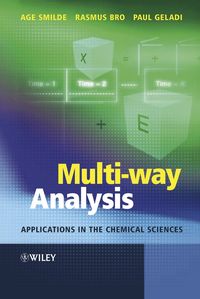
This book is an introduction to the field of multi-way analysis for chemists and chemometricians. Its emphasis is on the ideas behind the method and its pratical applications. Sufficient mathematical background is given to provide a solid understanding of the ideas behind the method. There are currently no other books on the market which deal with this method from the viewpoint of its applications…
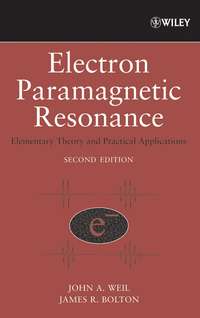
This book provides an introduction to the underlying theory, fundamentals, and applications of EPR spectroscopy, as well as new developments in the area. Knowledge of the topics presented will allow the reader to interpret of a wide range of EPR spectra, as well as help them to apply EPR techniques to problem solving in a wide range of areas: organic, inorganic, biological, and analytical chemistr…
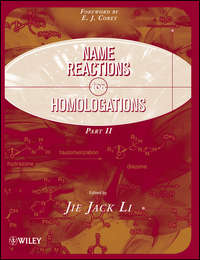
A valuable addition to the literature by any measure and surely will prove its merit in years to come. The new knowledge that arises with its help will be impressive and of great benefit to humankind. —From the Foreword by E. J. Corey, Nobel Prize Laureate An invaluable guide to name reactions and reagents for homologations Name Reactions for Homologations, Part II of Wiley's Comprehensive Name Re…
This book covers the theory and applications of continuum solvation models. The main focus is on the quantum-mechanical version of these models, but classical approaches and combined or hybrid techniques are also discussed. Devoted to solvation models in which reviews of the theory, the computational implementation Solvation continuum models are treated using the different points of view from expe…