
Чтец книг Stacey Patterson

Aristotle's Poetics (Greek: Περὶ ποιητικῆς; Latin: De Poetica) is the earliest surviving work of dramatic theory and first extant philosophical treatise to focus on literary theory. In it, Aristotle offers an account of what he calls «poetry» (a term that derives from a classical Greek term, ποιητής, that means «poet; author; maker» and in this context includes verse drama – comedy, tragedy, and t…

Phædo or Phaedo (Greek: Φαίδων, Phaidōn), also known to ancient readers as On The Soul, is one of the best-known dialogues of Plato's middle period, along with the Republic and the Symposium. The philosophical subject of the dialogue is the immortality of the soul. It is set in the last hours prior to the death of Socrates, and is Plato's fourth and last dialogue to detail the philosopher's final …

The Autobiography of Benjamin Franklin is the traditional name for the unfinished record of his own life written by Benjamin Franklin from 1771 to 1790; however, Franklin himself appears to have called the work his Memoirs. Although it had a tortuous publication history after Franklin's death, this work has become one of the most famous and influential examples of an autobiography ever written. Fr…

The Way to Wealth is an essay written by Benjamin Franklin in 1758. It is a collection of adages and advice presented in Poor Richard's Almanac during its first 25 years of publication, organized into a speech given by «Father Abraham» to a group of people. Many of the phrases Father Abraham quotes continue to be familiar today. The essay's advice is based on the themes of work ethic and frugality…
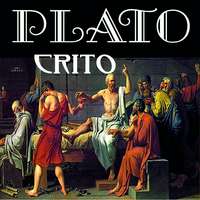
Crito (Ancient Greek: Κρίτων [krítɔːn]) is a dialogue by the ancient Greek philosopher Plato. It depicts a conversation between Socrates and his wealthy friend Crito regarding justice (δικαιοσύνη), injustice (ἀδικία), and the appropriate response to injustice. Socrates thinks that injustice may not be answered with injustice, and refuses Crito's offer to finance his escape from prison. The dialogu…
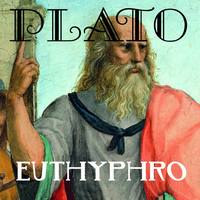
Euthyphro (Ancient Greek: Εὐθύφρων, romanized: Euthyphrōn; c. 399–395 BC), by Plato, is a Socratic dialogue whose events occur in the weeks before the trial of Socrates (399 BC), between Socrates and Euthyphro. The dialogue covers subjects such as the meaning of piety and justice. The Euthyphro dialogue occurs near the court of the archon basileus (king magistrate), where Socrates and Euthyphro en…
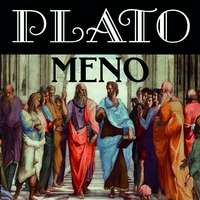
Meno (Greek: Μένων, Menōn) is a Socratic dialogue scripted by Plato. It appears to attempt to determine the definition of virtue, or arete, meaning virtue in general, rather than particular virtues, such as justice or temperance. The first part of the work is written in the Socratic dialectical style and Meno is reduced to confusion or aporia. In response to Meno's paradox (or the learner's parado…