Чтец книг Joe Phoenix
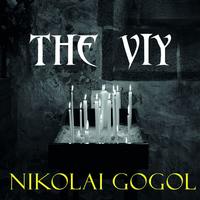
"Viy", also translated as «The Viy», is a horror novella by Russian writer Nikolai Gogol, first published in the first volume of his collection of tales entitled Mirgorod (1835). The title is also the name of the demonic entity central to the plot. Every summer, there is usually a large procession of all the students moving around the area as they travel home. However, the group is reduced to thre…
"Viy", also translated as «The Viy», is a horror novella by Russian writer Nikolai Gogol, first published in the first volume of his collection of tales entitled Mirgorod (1835). The title is also the name of the demonic entity central to the plot. Every summer, there is usually a large procession of all the students moving around the area as they travel home. However, the group is reduced to thre…
"Viy", also translated as «The Viy», is a horror novella by Russian writer Nikolai Gogol, first published in the first volume of his collection of tales entitled Mirgorod (1835). The title is also the name of the demonic entity central to the plot. Every summer, there is usually a large procession of all the students moving around the area as they travel home. However, the group is reduced to thre…

The Christmas Tree and the Wedding" is a short story written by Russian author Fyodor Dostoyevsky published in 1848. The piece is narrated by an awkward outcast attending a Christmas party. He observes the party's guest of honour and takes special interest in one of the children. The narrator begins by mentioning to the reader that he had just been to a wedding but recalls a Christmas party that h…
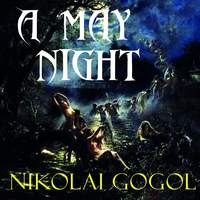
"May Night, or the Drowned Maiden", 1831 is the third tale in the collection Evenings on a Farm Near Dikanka by Nikolai Gogol. It was made into the opera May Night by Nikolai Rimsky-Korsakov in 1878–79 and also a Ukrainian setting by Mykola Lysenko. This story comes from the unnamed story-teller (who was previously responsible for «The Fair at Sorochyntsi»). In this tale, a young Cossack named Lev…
"May Night, or the Drowned Maiden", 1831 is the third tale in the collection Evenings on a Farm Near Dikanka by Nikolai Gogol. It was made into the opera May Night by Nikolai Rimsky-Korsakov in 1878–79 and also a Ukrainian setting by Mykola Lysenko. This story comes from the unnamed story-teller (who was previously responsible for «The Fair at Sorochyntsi»). In this tale, a young Cossack named Lev…
"May Night, or the Drowned Maiden", 1831 is the third tale in the collection Evenings on a Farm Near Dikanka by Nikolai Gogol. It was made into the opera May Night by Nikolai Rimsky-Korsakov in 1878–79 and also a Ukrainian setting by Mykola Lysenko. This story comes from the unnamed story-teller (who was previously responsible for «The Fair at Sorochyntsi»). In this tale, a young Cossack named Lev…
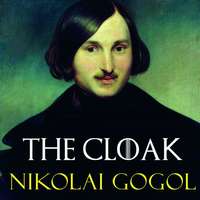
"The Overcoat" (sometimes translated as «The Cloak») is a short story by Ukrainian-born Russian author Nikolai Gogol, published in 1842. The story and its author have had great influence on Russian literature, as expressed in a quote attributed to Fyodor Dostoyevsky: «We all come out from Gogol's 'Overcoat'.» The story narrates the life and death of titular councillor Akaky Akakievich Bashmachkin,…
"The Overcoat" (sometimes translated as «The Cloak») is a short story by Ukrainian-born Russian author Nikolai Gogol, published in 1842. The story and its author have had great influence on Russian literature, as expressed in a quote attributed to Fyodor Dostoyevsky: «We all come out from Gogol's 'Overcoat'.» The story narrates the life and death of titular councillor Akaky Akakievich Bashmachkin,…
"The Overcoat" (sometimes translated as «The Cloak») is a short story by Ukrainian-born Russian author Nikolai Gogol, published in 1842. The story and its author have had great influence on Russian literature, as expressed in a quote attributed to Fyodor Dostoyevsky: «We all come out from Gogol's 'Overcoat'.» The story narrates the life and death of titular councillor Akaky Akakievich Bashmachkin,…
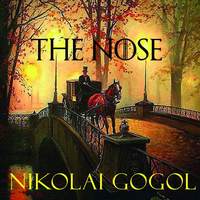
"The Nose" is a satirical short story by Nikolai Gogol written during his time living in St. Petersburg. During this time, Gogol's works were primarily focused on surrealism and the grotesque, with a romantic twist. Written between 1835 and 1836, «The Nose» tells the story of a St. Petersburg official whose nose leaves his face and develops a life of its own. «The Nose» was originally published in…
"The Nose" is a satirical short story by Nikolai Gogol written during his time living in St. Petersburg. During this time, Gogol's works were primarily focused on surrealism and the grotesque, with a romantic twist. Written between 1835 and 1836, «The Nose» tells the story of a St. Petersburg official whose nose leaves his face and develops a life of its own. «The Nose» was originally published in…
"The Nose" is a satirical short story by Nikolai Gogol written during his time living in St. Petersburg. During this time, Gogol's works were primarily focused on surrealism and the grotesque, with a romantic twist. Written between 1835 and 1836, «The Nose» tells the story of a St. Petersburg official whose nose leaves his face and develops a life of its own. «The Nose» was originally published in…

""Viy"", also translated as «„The Viy“», is a horror novella by Russian writer Nikolai Gogol, first published in the first volume of his collection of tales entitled Mirgorod (1835). The title is also the name of the demonic entity central to the plot. Every summer, there is usually a large procession of all the students moving around the area as they travel home. However, the group is reduced to …
""Viy"", also translated as «„The Viy“», is a horror novella by Russian writer Nikolai Gogol, first published in the first volume of his collection of tales entitled Mirgorod (1835). The title is also the name of the demonic entity central to the plot. Every summer, there is usually a large procession of all the students moving around the area as they travel home. However, the group is reduced to …