
Книги жанра научно-популярная литература
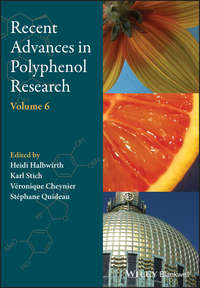
Plant polyphenols are secondary metabolites that constitute one of the most common and widespread groups of natural products. They are crucial constituents of a large and diverse range of biological functions and processes, and provide many benefits to both plants and humans. Many polyphenols, from their structurally simplest representatives to their oligo/polymeric versions, are notably known as …
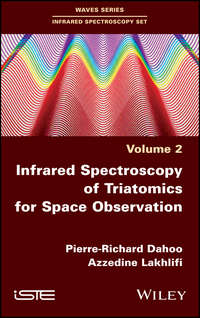
This book is dedicated to the application of the different theoretical models described in Volume 1 to identify the near-, mid- and far-infrared spectra of linear and nonlinear triatomic molecules in gaseous phase or subjected to environmental constraints, useful for the study of environmental sciences, planetology and astrophysics. The Van Vleck contact transformation method, described in Volume …
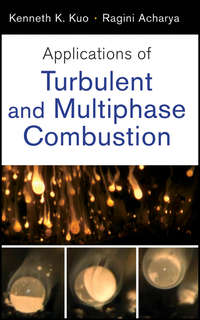
A hands-on, integrated approach to solving combustion problems in diverse areas An understanding of turbulence, combustion, and multiphase reacting flows is essential for engineers and scientists in many industries, including power genera-tion, jet and rocket propulsion, pollution control, fire prevention and safety, and material processing. This book offers a highly practical discussion of burnin…
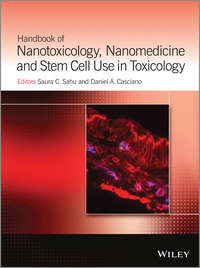
The Handbook of Nanotoxicology, Nanomedicine and Stem Cell Use in Toxicology provides an insight into the current trends and future directions of research in these rapidly developing scientific fields. Written by leading scientists and experts, the Handbook will be of interest to various scientific disciplines including toxicology, medicine, and pharmacology, as well as food, drug, and other regul…

This is the fully illustrated eBook, recommended for viewing on a colour tablet.Top ten Sunday Times Bestseller‘Engaging, ambitious and creative’ GuardianWhere are we? Are we alone? Who are we? Why are we here? What is our future?Human Universe tackles some of the greatest questions that humans have asked to try and understand the very nature of ourselves and the Universe in which we live.Through …
Polymorphism in the Pharmaceutical Industry – Solid Form and Drug Development highlights the relevance of polymorphism in modern pharmaceutical chemistry, with a focus on quality by design (QbD) concepts. It covers all important issues by way of case studies, ranging from properties and crystallization, via thermodynamics, analytics and theoretical modelling right up to patent issues. As such, the…
Exploring environmental changes through Earth’s geological history using chemostratigraphy Chemostratigraphy is the study of the chemical characteristics of different rock layers. Decoding this geochemical record across chronostratigraphic boundaries can provide insights into geological history, past climates, and sedimentary processes. Chemostratigraphy Across Major Chronological Boundaries prese…
‘Highly readable, subtle and thought-provoking scientific history’ ScotsmanIn this penetrating work, Pyenson and Pyenson identify that major advances in science stem from changes in three distinct areas of society: the social institutions that promote science, the sensibilities of scientists themselves and the goal of the scientific enterprise. Servants of Nature begins by examining the institutio…
An all-inclusive guide on the analytical methods of Raman, infrared, and near-infrared chemical imaging An underutilized technology, chemical imaging through Raman, infrared (IR), and near-infrared (NIR) is beginning to gain recognition for its non-destructive method of permitting visualization of spatially resolved chemical information. This type of analysis is triggering a groundswell of demand …

Each chapter begins with a brief yet complete presentation of the related topic. This is followed by a series of solved problems. The latter are scrupulously detailed and complete the synthetic presentation given at the beginning of each chapter. There are about 50 solved problems, which are mostly original with gradual degree of complexity including those related to recent findings in convective …

Tag-based approaches were originally designed to increase the throughput of capillary sequencing, where concatemers of short sequences were first used in expression profiling. New Next Generation Sequencing methods largely extended the use of tag-based approaches as the tag lengths perfectly match with the short read length of highly parallel sequencing reactions. Tag-based approaches will maintai…

Enlarged, enhanced and internationalized edition of the first restoration ecology textbook to be published, with foreword by Dr. Steven Whisnant of Texas A&M University and Chair of the Society of Ecological Restoration. Since 2006, when the first edition of this book appeared, major advances have taken place in restoration science and in the practice of ecological restoration. Both are now accept…
This thoroughly updated version of the German authoritative work on self-organization has been completely rewritten by internationally renowned experts and experienced book authors to also include a review of more recent literature. It retains the original enthusiasm and fascination surrounding thermodynamic systems far from equilibrium, synergetics, and the origin of life, representing an easily …
The definitive resource for electroplating, now completely up to date With advances in information-age technologies, the field of electroplating has seen dramatic growth in the decade since the previous edition of Modern Electroplating was published. This expanded new edition addresses these developments, providing a comprehensive, one-stop reference to the latest methods and applications of elect…
Filling a gap on the market, this handbook and ready reference is unique in its discussion of the usefulness of various heterocyclic systems in the synthesis of natural products. Clearly structured for easy access to the information, each chapter is devoted to a certain class of heterocycle, providing a tabular presentation of the natural products to be covered containing the particular heterocycl…