Книги жанра научно-популярная литература

The tools for detecting false positives, false negatives, and interference in interactions when testing and monitoring therapeutic drug use For physicians monitoring a patient's progress, efficacy of treatment is often linked to a patient's response to medication. Determining whether a patient is taking the prescribed amount, the drug or dosage is effective, or the prescribed medication is interac…
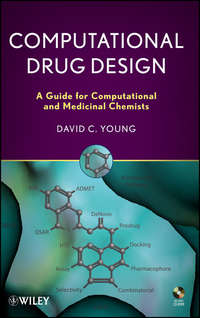
Helps you choose the right computational tools and techniques to meet your drug design goals Computational Drug Design covers all of the major computational drug design techniques in use today, focusing on the process that pharmaceutical chemists employ to design a new drug molecule. The discussions of which computational tools to use and when and how to use them are all based on typical pharmaceu…

Published by the American Geophysical Union as part of the Special Publications Series. Geotrekking in Southeastern Arabia presents the world’s most diverse geology and reveals some of the unique rocks that were once covered under shallow seas and are now sub-aerially exposed. This guidebook describes various routes that leads to specific locations for viewing the distinctive and world class geolo…
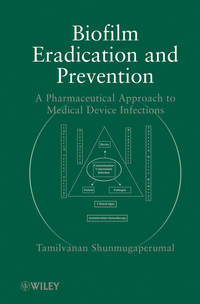
Biofilm Eradication and Preventions presents the basics of biofilm formation on medical devices, diseases related to this formation, and approaches pharmaceutical researchers need to take to limit this problem. Split into three parts, the first deals with the development and characterization of biofilm on the surfaces of implanted or inserted medical devices. Questions as to why biofilms form over…
Digital Design of Signal Processing Systems discusses a spectrum of architectures and methods for effective implementation of algorithms in hardware (HW). Encompassing all facets of the subject this book includes conversion of algorithms from floating-point to fixed-point format, parallel architectures for basic computational blocks, Verilog Hardware Description Language (HDL), SystemVerilog and c…
A time-tested, systematic approach to the buying and selling of complex research instruments Searching for the best laboratory instruments and systems can be a daunting and expensive task. A poorly selected instrument can dramatically affect results produced and indirectly affect research papers, the quality of student training, and an investigator's chances for advancement. Buying and Selling Lab…

R – the statistical and graphical environment is rapidly emerging as an important set of teaching and research tools for biologists. This book draws upon the popularity and free availability of R to couple the theory and practice of biostatistics into a single treatment, so as to provide a textbook for biologists learning statistics, R, or both. An abridged description of biostatistical principles…
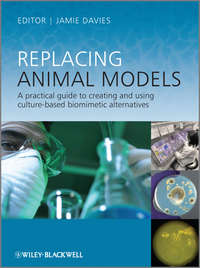
Over the last decade, in vitro models have become more sophisticated and are at a stage where they can provide an effective alternative to in vivo experiments. Replacing Animal Models provides scientists and technicians with a practical, integrated guide to developing culture-based alternatives to in vivo experiments. The book is neither political nor polemical: it is technical, illustrating by ex…
The goal of this book is to teach undergraduate students how to use Scientific Notebook (SNB) to solve physics problems. SNB software combines word processing and mathematics in standard notation with the power of symbolic computation. As its name implies, SNB can be used as a notebook in which students set up a math or science problem, write and solve equations, and analyze and discuss their resu…
Technology Platforms for 3D Cell Culture: A Users Guide points to the options available to perform 3D culture, shows where such technology is available, explains how it works, and reveals how it can be used by scientists working in their own labs. Offers a comprehensive, focused guide to the current state-of-the-art technologies available for 3D cell culture Features contributions from leading dev…
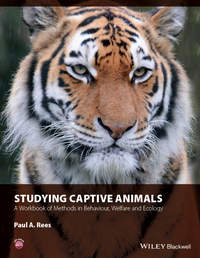
Studying Captive Animals outlines the methods that may be used to study the behaviour, welfare and ecology of animals living under the control of humans, including companion animals, feral populations, and those living on farms and in zoos. This book is a step-by-step guide to the whole process of conducting a scientific study: from designing the original project, formulating testable hypotheses, …
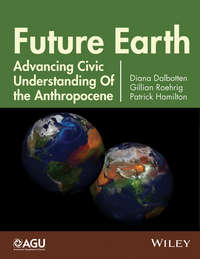
Earth now is dominated by both biogeophysical and anthropogenic processes, as represented in these two images from a simulation of aerosols. Dust (red) from the Sahara sweeps west across the Atlantic Ocean. Sea salt (blue) rises into the atmosphere from winds over the North Atlantic and from a tropical cyclone in the Indian Ocean. Organic and black carbon (green) from biomass burning is notable ov…
Organic Reaction Mechanisms 2006 is the 42nd volume in this classical series. Every year, an experienced team of authors compiles these reviews, so that the reader can rely on a continuing quality of selection and presentation. Detailed author and subject indexes help the reader to find the information they are looking for. As a new service to the reader, all reaction mechanisms leading to stereos…

Organic Reaction Mechanisms 2007, the 43rd annual volume in this highly successful and unique series, surveys research on organic reaction mechanisms described in the available literature dated 2007. The following classes of organic reaction mechanisms are comprehensively reviewed: Reaction of Aldehydes and Ketones and their Derivatives Reactions of Carboxylic, Phosphoric, and Sulfonic Acids and t…

This volume is the 44th in this classical series. In every volume relevant reaction mechanisms are featured in chapters entitled: Reaction of Aldehydes and Ketones and their Derivatives Reactions of Carboxylic, Phosphoric, and Sulfonic Acids and their Derivatives Oxidation and Reduction Carbenes and Nitrenes Nucleophilic Aromatic Substitution Electrophilic Aromatic Substitution Carbocations Nucleo…