
Книги жанра научно-популярная литература
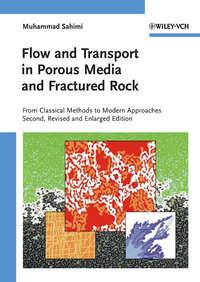
In this standard reference of the field, theoretical and experimental approaches to flow, hydrodynamic dispersion, and miscible displacements in porous media and fractured rock are considered. Two different approaches are discussed and contrasted with each other. The first approach is based on the classical equations of flow and transport, called 'continuum models'. The second approach is based on…
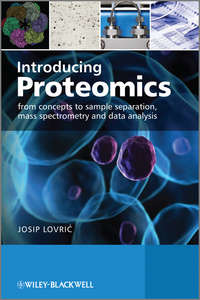
Introducing Proteomics gives a concise and coherent overview of every aspect of current proteomics technology, which is a rapidly developing field that is having a major impact within the life and medical sciences. This student-friendly book, based on a successful course developed by the author, provides its readers with sufficient theoretical background to be able to plan, prepare, and analyze a …
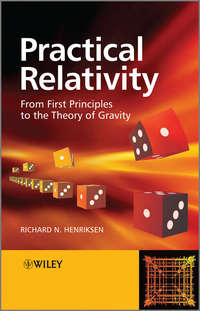
The book is intended to serve as lecture material for courses on relativity at undergraduate level. Although there has been much written on special relativity the present book will emphasize the real applications of relativity. In addition, it will be physically designed with the use of box summaries so as to allow easy access of practical results. The book will be composed of eight chapters. Chap…
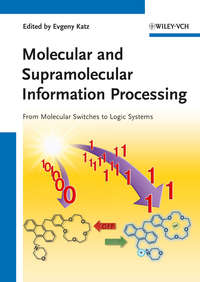
Edited by a renowned and much cited chemist, this book covers the whole span of molecular computers that are based on non-biological systems. The contributions by all the major scientists in the field provide an excellent overview of the latest developments in this rapidly expanding area. A must-have for all researchers working on this very hot topic. Perfectly complements Biomolecular Information…
Edited by a highly regarded scientist and with contributions from sixteen international research groups, spanning Asia and North America, Rare Earth Coordination Chemistry: Fundamentals and Applications provides the first one-stop reference resource for important accomplishments in the area of rare earth. Consisting of two parts, Fundamentals and Applications, readers are armed with the systematic…
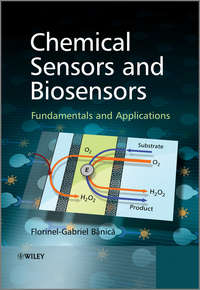
Key features include: Self-assessment questions and exercises Chapters start with essential principles, then go on to address more advanced topics More than 1300 references to direct the reader to key literature and further reading Highly illustrated with 450 figures, including chemical structures and reactions, functioning principles, constructive details and response characteristics Chemical sen…
Lanthanides are of great importance for the electronic industries, this new book (from the EIBC Book Series) provides a comprehensive coverage of the basic chemistry, particularly inorganic chemistry, of the lanthanoid elements, those having a 4f shell of electrons. A chapter is describing the similarity of the Group 3 elements, Sc, Y, La, the group from which the lanthanoids originate and the gro…
This book bridges three different fields: nanoscience, bioscience, and environmental sciences. It starts with fundamental electrostatics at interfaces and includes a detailed description of fundamental theories dealing with electrical double layers around a charged particle, electrokinetics, and electrical double layer interaction between charged particles. The stated fundamentals are provided as …
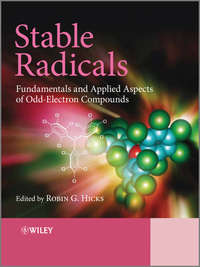
Stable radicals – molecules with odd electrons which are sufficiently long lived to be studied or isolated using conventional techniques – have enjoyed a long history and are of current interest for a broad array of fundamental and applied reasons, for example to study and drive novel chemical reactions, in the development of rechargeable batteries or the study of free radical reactions in the bod…
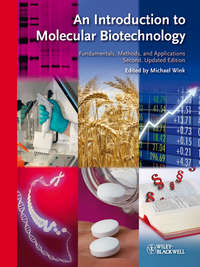
Molecular biotechnology continues to triumph, as this textbook testifies – edited by one of the academic pioneers in the field and written by experienced professionals. This completely revised second edition covers the entire spectrum, from the fundamentals of molecular and cell biology, via an overview of standard methods and technologies, the application of the various «-omics», and the developm…
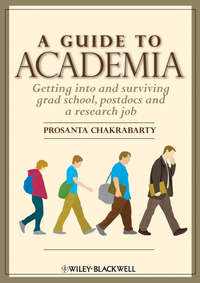
A Guide to Academia is a handbook for all those individuals thinking seriously about going to graduate school. Written by an author with extensive experience navigating the academic world, the book explains all the steps and potential bumps in the road that a student might encounter as they take the plunge into academia. Each chapter begins with a section called the «hard truth,» which will help s…
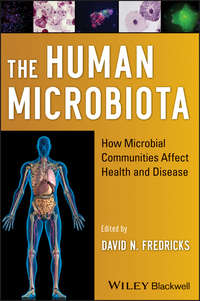
The Human Microbiota offers a comprehensive review of all human-associated microbial niches in a single volume, focusing on what modern tools in molecular microbiology are revealing about human microbiota, and how specific microbial communities can be associated with either beneficial effects or diseases. An excellent resource for microbiologists, physicians, infectious disease specialists, and ot…
Effective Learning in the Life Sciences is intended to help ensure that each student achieves his or her true potential by learning how to solve problems creatively in laboratory, field or other workplace setting. Each chapter describes state of the art approaches to learning and teaching and will include case studies, worked examples and a section that lists additional online and other resources.…
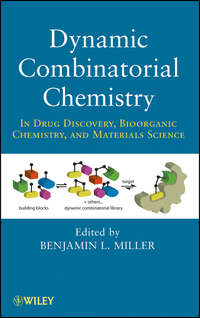
Effective techniques for applying Dynamic Combinatorial Chemistry In a relatively short period, Dynamic Combinatorial Chemistry (DCC) has grown from proof-of-concept experiments in a few isolated labs to a broad conceptual framework with applications to an exceptional range of problems in molecular recognition, lead compound identification, catalyst design, nanotechnology, polymer science, and oth…
A revision of a professional text on the phenomena of chaotic vibrations in fluids and solids. Major changes reflect the latest developments in this fast-moving topic, the introduction of problems to every chapter, additional mathematics and applications, more coverage of fractals, numerous computer and physical experiments. Contains eight pages of 4-color pictures.