Книги жанра общая психология
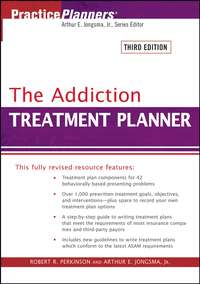
The Addiction Treatment Planner, Third Edition provides all the elements necessary to quickly and easily develop formal treatment plans that satisfy the demands of HMOs, managed care companies, third-party payors, and state and federal review agencies. This Third Edition includes new language for evidence-based care that fits mandates set forth by the American Society of Addiction Medicine (ASAM),…
Interventions for Amphetamine Misuse is a practical, useable guide for health professionals working in the field. It details the physical and psychological problems associated with the drug's abuse, provides a detailed and evidence-based assessment of the interventions currently in use worldwide, and offers a broad historical and cultural overview. The book includes detailed case studies to illust…
In the treatment of addictions and their psychological understanding, cognitive-behavioural and motivation approaches have been paramount. In contrast, the psychodynamic contribution has been muted. This book redresses this imbalance by bringing together a team of senior clinicians with psychotherapeutic backgrounds as well as extensive experience in addiction. Stress is placed on the diversity of…
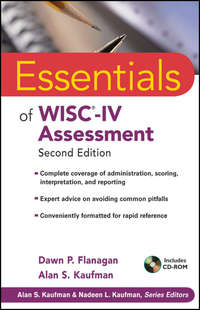
The WISC-IV is the top intelligence assessment instrument for children in the US, providing essential information into a child s cognitive functioning. Essentials of WISC-IV Assessment with CD-ROM, Second Edition presents professionals with step-by-step instruction on scoring and interpreting this test. Thoroughly updated, the new edition is now packaged with a CD-ROM for interpreting and scoring …
The last three decades have seen an explosion of social, psychological and clinical research to identify effective strategies to prevent and treat alcohol-related problems. This “Essential Handbook” contains an updated selection of reviews of “what works” drawn from the critically acclaimed International Handbook of Alcohol Dependence and Problems. Selected specifically for health and other profes…
The perfect handbook for the clinical supervisor. —Nancy Waite-O’Brien, director, Education and Training, Betty Ford Center «An outstanding contribution to the professional well-being of the addiction field.» —Thomas McGovern, editor, Addiction Treatment Quarterly «Forever useful.» —S. Beckett, education and training coordinator, National Association of Alcohol and Drug Abuse Counselors
Understand all the aspects of beginning and sustaining a therapeutic practice with The Therapist's Starter Guide: Setting Up and Building Your Practice, Working with Clients, and Managing Professional Growth, a practical, hands-on guide to professional fulfillment and business success. If you’re a new practitioner or seek to grow your practice, this book will provide you with the skills you need t…
Praise for Treatment of Traumatized Adults and Children «A major stumbling block to adoption of evidence-based practice in the real world of clinical practice has been the absence of clinician-friendly guides. Such guides need to be understandable, free of technical research jargon, infused with clinical expertise, and rich with real-life examples. Rubin and Springer have hit a home run with this …
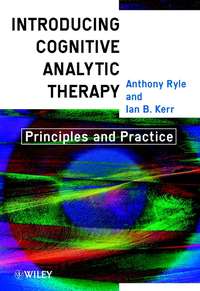
This is a comprehensive, up-to-date introduction to the origins, development, and practice of cognitive-analytic therapy (CAT). Written by the founder of the method and an experienced psychiatric practitioner and lecturer, it offers a guide to the potential application and experience of CAT with a wide range of difficult clients and disorders and in a variety of hospital, community care and privat…
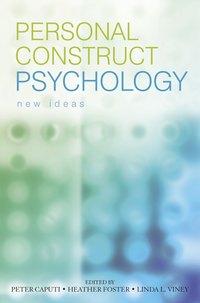
This book presents the latest thinking and research in Personal Construct Psychology (PCP) covering a broad range of areas of interest to both researcher and practitioner. It provides reports of empirical research, reflections by practicing personal construct psychologists and conceptual analyses of issues pertaining to current and emerging theoretical issues in PCP. The book consists of five sect…
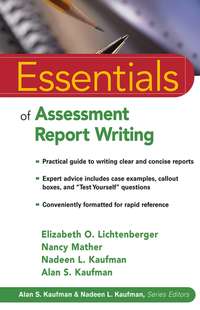
Instructive guide to preparing informative and accurate assessment reports for a variety of individuals and settings Assessment reports are central to the diagnostic process and are used to inform parents, clients, and clinicians, among others, about academic problems, personality functioning, neuropsychological strengths and weaknesses, behavioral problems, and the like. Essentials of Assessment …
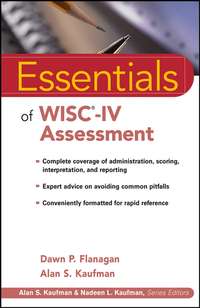
A successor to the extremely popular Essentials of WISC-III/WPPSI-R Assessment(0-471-34501-6), Essentials of WISC-IV Assessment provides beginning and seasoned clinicians comprehensive guidelines to administering, scoring, and interpreting the latest revision of the Wechsler Intelligence Scales for Children. Featuring the popular Essentials format of call-out boxes, Test Yourself questions and ste…
Discover practical, step-by-step instructions for accurately and effectively assessing creativity with Essentials of Creativity Assessment, a guide that provides useful information about using solid theoretical and research-based evidence for creativity assessment. Quickly acquire the knowledge and skills you need to effectively assess creativity, a popular measure of cognitive ability correlated …
Quickly acquire the knowledge and skills you need to confidently administer, score, and interpret the KABC-II Now designed for children aged three to eighteen, the KABC-II is among the top tier of children's tests of cognitive ability. Alan and Nadeen Kaufman, authors of the KABC-II, joined forces with Elizabeth Lichtenberger and Elaine Fletcher-Janzen to produce Essentials of KABC-II Assessment. …
Essentials of WNV Assessment provides practitioners with practical, step-by-step advice for administering, scoring, and interpreting the Wechsler Nonverbal Scale of Ability (WNV), a nonverbal assessment used to assess a wide variety of individuals. Written by Kimberly Brunnert, Jack Naglieri, and Steven Hardy-Braz, the test is especially well suited for those who are not proficient in English, suc…