Книги жанра зарубежная образовательная литература
The Advances in Chemical Physics series provides the chemical physics and physical chemistry fields with a forum for critical, authoritative evaluations of advances in every area of the discipline. Filled with cutting-edge research reported in a cohesive manner not found elsewhere in the literature, each volume of the Advances in Chemical Physics series serves as the perfect supplement to any adva…
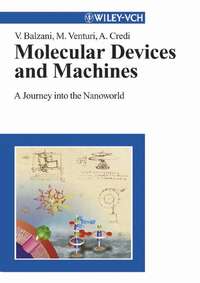
The miniaturization of bulky devices and machines is a process that confronts us on a daily basis. However, nanoscale machines with varied and novel characteristics may also result from the enlargement of extremely small building blocks, namely individual molecules. This bottom-up approach to nanotechnology is already being pursued in information technology, with many other branches about to follo…
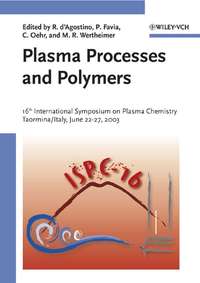
This volume compiles essential contributions to the most innovative fields of Plasma Processes and Polymers. High-quality contributions cover the fields of plasma deposition, plasma treatment of polymers and other organic compounds, plasma processes under partial vacuum and at atmospheric pressure, biomedical, textile, automotive, and optical applications as well as surface treatment of bulk mater…
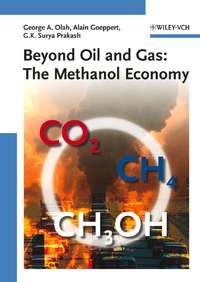
In this masterpiece, the renowned chemistry Nobel Laureate, George A. Olah and his colleagues discuss in a clear and readily accessible manner the use of methanol as a viable alternative to our diminishing fossil fuel resources. They look at the pros and cons of our current main energy sources, namely oil and natural gas, and varied renewable energies, and new ways to overcome obstacles. Following…
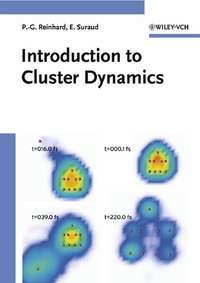
Clusters as mesoscopic particles represent an intermediate state of matter between single atoms and solid material. The tendency to miniaturise technical objects requires knowledge about systems which contain a «small» number of atoms or molecules only. This is all the more true for dynamical aspects, particularly in relation to the qick development of laser technology and femtosecond spectroscopy…
Gradient elution demystified Of the various ways in which chromatography is applied today, few have been as misunderstood as the technique of gradient elution, which presents many challenges compared to isocratic separation. When properly explained, however, gradient elution can be less difficult to understand and much easier to use than often assumed. Written by two well-known authorities in liqu…
HPLC for Pharmaceutical Scientists is an excellent book for both novice and experienced pharmaceutical chemists who regularly use HPLC as an analytical tool to solve challenging problems in the pharmaceutical industry. It provides a unified approach to HPLC with an equal and balanced treatment of the theory and practice of HPLC in the pharmaceutical industry. In-depth discussion of retention proce…
Choosing the right column is key in Gas Chromatography Gas Chromatography (GC) is the most widely used method for separating and analyzing a wide variety of organic compounds and gases. There have been many recent advancements in both packed column and capillary column GC. With numerous options and considerations, selecting the right column can be complicated. This resource provides essential guid…
Choosing the right column is key in Gas Chromatography Gas Chromatography (GC) is the most widely used method for separating and analyzing a wide variety of organic compounds and gases. There have been many recent advancements in both packed column and capillary column GC. With numerous options and considerations, selecting the right column can be complicated. This resource provides essential guid…
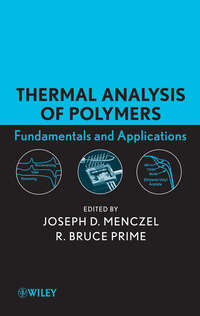
Presents a solid introduction to thermal analysis, methods, instrumentation, calibration, and application along with the necessary theoretical background. Useful to chemists, physicists, materials scientists, and engineers who are new to thermal analysis techniques, and to existing users of thermal analysis who wish expand their experience to new techniques and applications Topics covered include …
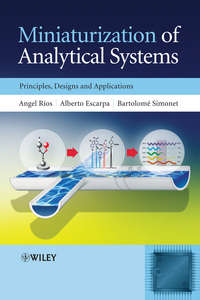
The book describes a general vision of the miniaturization of the analytical systems, including their principles, designs and applications. Through ten chapters the different aspects characterizing the miniaturized systems are developed. Thus, the two first chapters include the basic concepts behind miniaturization in analytical chemistry, as well as the mechanical and electronic tools needed for …
This international collection of chapters comprehensively covers different aspects of procedures for speciation analysis at all levels starting from sample collection and storage, through sample preparation approaches to render the species chromatographable, principles of separation techniques used in speciation analysis, to the element specific detection. International renowned editors and contri…
A key component of the overall quality of a pharmaceutical is control of impurities, as their presence, even in small amounts, may affect drug safety and efficacy. The identification and quantification of impurities to acceptable standards presents a significant challenge to the analytical chemist. Analytical science is developing rapidly and provides increasing opportunity to identify the structu…
The only reference to provide both current and thorough coverage of this important analytical technique Static headspace-gas chromatography (HS-GC) is an indispensable technique for analyzing volatile organic compounds, enabling the analyst to assay a variety of sample matrices while avoiding the costly and time-consuming preparation involved with traditional GC. Static Headspace-Gas Chromatograph…
'Spatially Resolved Magnetic Resonance' provides comprehensive and exhaustive coverage of the state of the art in magnetic resonance imaging. Focusing on nonclinical applications, readers learn about the possibilities, limitations and strengths of magnetic resonance methods in a broad range of fields, from materials science, medicine, biology, to geology and ecology. New and innovative application…