Книги жанра технические науки
Published in Cooperation with THE WORLD AQUACULTURE SOCIETY Shrimp is the most important commodity, by value, in the international seafood trade. The shrimp industry has grown exponentially in the last decades, and growth is expected to continue for years to come. For future success in the shrimp industry, shrimp farmers and aquaculture scientists will find a thorough knowledge of the economics, m…
Published in Cooperation with THE WORLD AQUACULTURE SOCIETY Aquaculture loses millions of dollars in revenue annually due to aquatic animal diseases. Disease outbreaks continue to threaten profitable and viable aquaculture operations throughout the world. As a result, aquaculture biosecurity programs that address aquatic animal pathogens and diseases have become an important focus for the aquacult…

The percid fishes (or perch family) comprise many species including the perch, pikeperch, yellow perch, walleye and the darters. These species are of great ecological and economic importance, being important components of the freshwater ecosystem and recreational and commercial fisheries. Percid Fishes covers aspects such as systematics, morphology, biology, ecology, diseases and parasites and the…

Fish have the same stress response and powers of nociception as mammals. Their behavioural responses to a variety of situations suggest a considerable ability for higher level neural processing – a level of consciousness equivalent perhaps to that attributed to mammals. Each chapter of this book has been written by specialists in their field. The subject matter is wide ranging and covers in detail…

Spiny lobsters are among the world's most valuable and highly prized seafoods, captured and marketed in over 90 countries. Demand for spiny lobsters has escalated in the past two decades, spurring the need both for better management and for research on which to base that management. Spiny lobster aquaculture, however, now appears to be a real possibility, some countries have already approved the l…
Crustacean Farming: Ranching and Culture, Second edition. John F. Wickins and Daniel O'C Lee. The second edition of an extremely well-received book, Crustacean Farming, deals with all cultivated crustaceans of commercial significance, shrimp, prawns, crayfish, lobsters, crabs, and spiny lobsters, and examines the criteria by which both the feasibility and desirability of farming proposals are asse…
Living resources of the sea and fresh water have long been an important source of food and economic activity. With fish stocks continuing to be over-exploited, there is a clear focus on fisheries management, to which acoustic methods can and do make an important contribution. The second edition of this widely used book covers the many technological developments which have occurred since the first …
Recreational or sport fishing is important for three major reasons: economic (it is a multi-billion dollar world industry); social (it is embedded in the cultures of many nations; ecological (it affects the environment and food webs in many ways). Recreational Fisheries covers a range of methods, case studies and perspectives on the multidisciplinary evaluation of the benefits and costs of sports …
The current high demand for fish and increased awareness of the role of the environment in supporting human well being has led to a situation where attitudes to inland water resources are changing rapidly. Trends in resource use and environmental impact are very evident in inland waters which are particularly vulnerable as they act as collectors of all the activities occurring in their basins and …
The scallop farming industry continues to expand, providing an important global source of food and revenue. In recent decades over-fishing has caused a decline in wild stocks and as consumer demand increases, the opportunities for new and existing scallop farming ventures are greater than ever before. In this important new edition, experienced scallop farmer David Hardy offers the reader: Practica…
As aquaculture continues to grow at a rapid pace, understanding the engineering behind aquatic production facilities is of increasing importance for all those working in the industry. Aquaculture engineering requires knowledge of the many general aspects of engineering such as material technology, building design and construction, mechanical engineering and environmental engineering. In this compr…
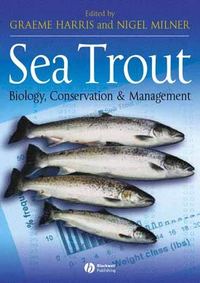
The Brown trout displays widely divergent life history strategies involving, variously, usage of streams, rivers, lakes, estuaries and the sea. The sea trout is the full sea-going form, it is very common and competes with salmon for the position of the most sought after migratory salmonid in many countries. Its use of freshwater, estuaries and coastal waters gives it a unique position as a sentine…
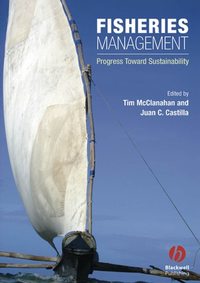
The world’s stocks of wild fish continue to decline, making the task of finding innovative, sustainable and socially acceptable methods of fisheries management more important than ever. Several new approaches from around the world have proved to be successful in stemming the decline whilst increasing fish catches, and under the editorship of McClanahan and Castilla this international team of autho…
This important title encompasses features of genetic processes in complexly organised population systems of salmonids, one of the most commercially valuable families of fish worldwide. Translated from the original work in Russian, the authors have taken the opportunity to update and revise the work, much of it appearing in the English language for the first time. Covering such important concepts a…
The oyster trade worldwide is of huge commercial importance, and the demand for high quality oysters is rising all the time. With wild stocks depleted, the ever-increasing multi-million dollar oyster farming industry is serving this demand. Oyster Culture is a thorough review of the subject, providing a huge wealth of practical and commercially vital information of importance to all those involved…